College can be overwhelming and challenging under the best of circumstances. Still, the traditional college scene for a young adult with Autism Spectrum Disorder (ASD), without the proper support, can be a nightmare.
Such was the case for my youngest daughter, Adrianna, who was not diagnosed with ASD until the age of 21.
Adrianna graduated from high school in May of 2019 as the salutatorian of her academy and was the recipient of the Zell Miller Scholarship which paid a hundred percent of her tuition.
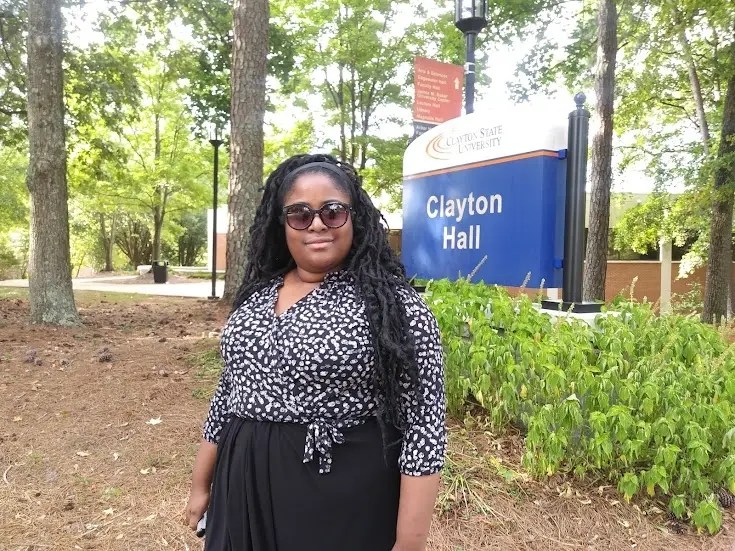
She started college as a music major at Clayton State University, a local university in Atlanta, Georgia. Although she commuted to school and talked to me and her father every day, little did we know that she was silently struggling with a myriad of physical, social, and emotional triggers as a college student.
As I look back on Adrianna’s years at Clayton State University, it’s painful for me to think of how she suffered, so the purpose of this article is to help others avoid some of the emotional turmoil and angst that my daughter suffered.
I recently interviewed Adrianna and asked her several questions about her experience as a student with ASD, and below are some insights that students and parents can use to better navigate ASD on their college journey.
What are some of the physical challenges you struggled with as a student on the spectrum when you attended college?
I have a lot of sensory issues so the cacophony of noises in large classrooms, hallways, and in the cafeteria overwhelmed my brain. I’m also sensitive to fluorescent lighting which triggers headaches and migraines.
Then there are the food allergies which are common with people who have ASD. I am lactose intolerant, allergic to nuts, and I am not able to tolerate the smell of salmon, tuna, or fish of any kind which makes eating on a college campus kind of tricky. I regularly struggled to find food that I was able to eat.
I didn’t know it at the time, but I had issues with gluten which means that I cannot eat any wheat-based products, so I was eating things on campus and at home that were making me sick without even realizing it.
It was only after becoming very ill in 2022, that we discovered I am gluten intolerant.
What were some of the social issues you faced when you were a student on campus?
Because of my social anxiety issues, I did not make any friends. I felt like I never felt connected to anybody. I felt like a dangling participle.
ASD makes it hard for me to pick up on social cues, and interpret facial expressions and other gestures, so I didn’t know whether my professors or the other students liked me or whether I was doing socially awkward things.
Not being able to read social queues is a terrifying experience. It’s like being blind. You cannot gain vital information that you need to function well. I was in a constant state of anxiety because I never knew if I was doing something wrong.
You were not diagnosed with autism until you were 21 years old. Why do you think it took so long for us to recognize that you might be on the spectrum?
I remember you and Dad being very surprised when I first came and told you that I thought I might be on the spectrum because I was a girl and I didn’t seem to have any obvious symptoms.
We now know that I was “masking” which, according to the National Autistic Society, “is a strategy used by some autistic people, consciously or unconsciously, to appear non-autistic”. Girls, in particular, have long been underdiagnosed because they are usually better at “masking” than boys.
What can a student or parent do if they think that they or their student might be on the spectrum?
If you suspect that something is not right or that you may be on the spectrum, you need to see a neurologist or a psychologist and start the process of examination.
A good place to start the process of examination would be with your family physician who may be able to refer you to a specialist. Also, talk with your insurance company to see what specialists are in your network of care.
According to online resources, a typical full evaluation can range between $1700-$2,300 depending on your age. This includes the initial diagnostic interview, additional testing, report writing, as well as the final feedback appointment.
Getting a diagnosis is important because it will help you better chart a path forward, and I personally felt a sense of relief knowing that what I was experiencing finally had a name.
Where can you go to get a diagnosis if you don’t have insurance?
Only a licensed neurologist and certain kinds of psychologists can test for ASD, but the counseling center and or the office of disability services at your college or university may be able to offer referrals to doctors in your area who do ASD testing and diagnoses including low or no-cost providers.
How can a student with ASD or other neurodivergent issues seek out special accommodations and additional support from their college or university?
Although I did not receive any special accommodations, according to the Americans with Disabilities Act (ADA), colleges are legally required to provide reasonable accommodations to students diagnosed with Autism Spectrum Disorder (ASD).
It’s important to understand, though, that once a student gets a diagnosis, they are responsible for initiating the process of requesting accommodations with their counselor by contacting the disability services office and providing documentation of their disability. The college is not responsible for initiating this process.
What can students with ASD and their parents do to manage their expectations about the college experience?
The more you know and understand ASD and how it specifically looks for you, the better you will be able to navigate your college experience.
This will require lots of patience, introspection, and communication. You may even need the assistance of a professional therapist to help you chart a path and develop a plan to move forward.
What are some other options for pursuing a college degree/higher education?
After leaving Clayton State University, I decided to enroll at Auguste Escoffier School of Culinary Arts which is based out of Boulder, CO. I started an online program in January of 2024, and I am currently enrolled in their Hospitality Operations and Restaurant Management program.
Most people with autism have what is called a special interest. Baking has been a special interest for me since I was a little child, so being able to go to school and pursue a degree doing what I have always loved makes me very happy.
How has doing school online helped you socially?
I used to think that it was important to have lots of friends in the same age group that you meet up with and do all of the same things with, but I now realize that you can have friends from different age groups and backgrounds. It doesn’t all have to be homogenous. I also don’t need to make a lot of friends. I just need a few good friends.
It may seem like a paradox, but doing school online helps me socially because it takes the pressure off of me. I don’t feel as overwhelmed and I have been able to make friends on my terms.
Besides the financial support, as parents, what can we do to provide support for our neurodivergent students?
Having parents who listen and being able to honestly communicate my struggles is everything!
When I first came and told you and Daddy that I thought I might be on the spectrum, you initially did not believe me, but as I continued to do research and share that information with you both, you started to listen and finally had me tested.
Since then, we have had dozens of conversations about ASD, and you immersed yourselves in reading and learning more about autism, and have been very supportive of my journey.
Being able to honestly share your struggles with your parents, and having them as advocates makes the challenges with ASD a lot easier.
In addition to pursuing your degree at Escoffier, what other things are you doing to advance your career in the culinary arts industry?
In addition to pursing my degree in culinary arts, I own and operate my home-based baking business, Cauthen Confections, and for 18-months, I spent time working in the commercial kitchens as a pastry and line cook which enabled me to gain more experience in the industry.
Are there any specific online resources that you can recommend to others who may be looking for more information about ASD or other practical support?
Yes, there are several organizations and online resources that we as a family have used for education and support, including Autism Speaks, The Association for Autism and Neurodiversity, and the National Association for Autism.
There are also a couple of good articles that I recommend parents read including an article about how to be a good listener, (https://www.desiringgod.org/articles/six-lessons-in-good-listening), and another article specifically about autism in girls (https://www.verywellhealth.com/signs-of-autism-in-girls-260304).
 The ProWriter's Studio